Malvern Lock ServicesService bulletin 1 of 3
Lock Replacement & Upgrade: step by step
After a break-in or an attempt, the door tells a story, and the new hardware should answer it.
Toronto, Ontario · Locksmith · open 24/7
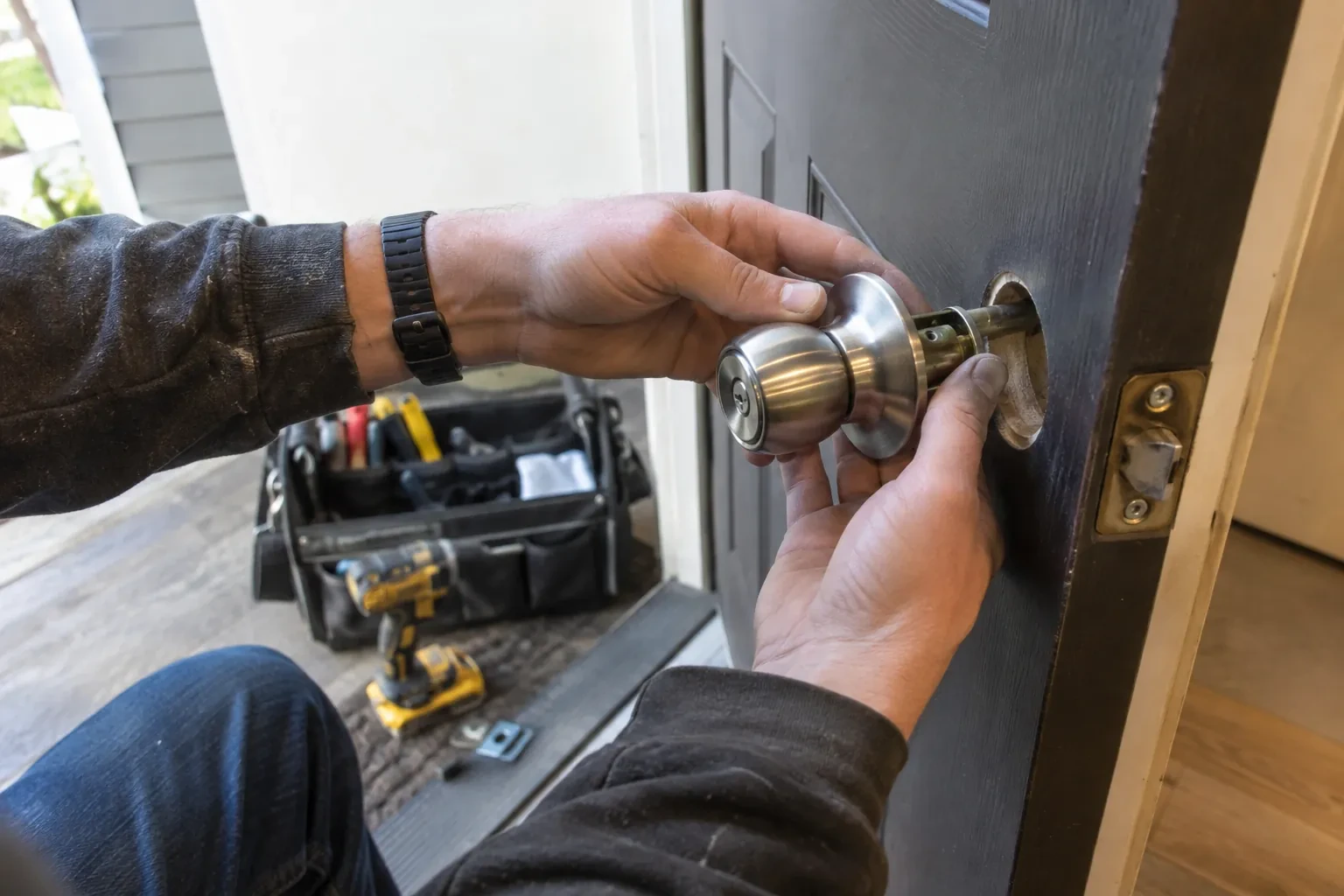
After a break-in or an attempt, the door tells a story, and the new hardware should answer it. Splintered wood around the strike means the jamb gave before the lock did, so the repair pairs a heavier deadbolt with a reinforced strike and 75 millimetre screws that reach the framing behind the jamb. A bent bolt or cracked housing is replaced with a graded deadbolt whose bolt has a hardened core. A knob lock that was bumped or forced is swapped for a set with better pins. The aim is a whole opening that resists force, not merely a shinier lock.
Measuring the existing preparation
Before any product is chosen the door is measured. Backset first, the distance from the door edge to the centre of the bore, which on most doors here is 60 or 70 millimetres. Then the cross-bore diameter, the edge-bore size, the shape of the latch faceplate, the door thickness and the handing. The strike cut-out and any glass, trim or storm door that limits where hardware can sit are noted too. These few numbers decide which locks will drop straight into the door and which would need a filler plate, an extension kit or fresh drilling, so they are written down before the catalogue is opened.
Setting and reinforcing the strike
The strike side is where a replacement earns most of its value. With the door closed, the bolt is thrown and its mark checked against the pocket so the strike can be positioned to accept the full throw without rubbing. A shallow pocket is deepened until the bolt seats to its stop. Then a reinforced strike or a strike box is fitted using 75 millimetre screws that pass through the jamb and bite into the framing behind it, which is what stops a jamb splitting under a kick. Where an old forced entry has cracked the wood, it is glued and dowelled or a repair plate is fitted first.
An opening that is stronger, not just newer
Where the strike was reinforced, the improvement is mostly invisible and worth understanding. Long screws now tie the strike through the jamb into the framing, the pocket has been cut to take the whole bolt, and any split wood has been repaired. Together these make the frame the equal of the deadbolt, which is the part most break-ins defeat. The locksmith points out what changed so you can check it yourself: a bolt that seats fully with the door closed and a strike that stays put under a firm push. A twice-yearly look at those screws keeps it that way.