Plan ahead Commercial · Toronto
Panic & Exit Hardware
Someone at the front counter always has to unlock the side door by hand before the lunch rush, because the round doorknob out there was never meant to be an exit for a room this size.
Call now · open 24/7(289) 301-2168In plain words
The visit ends with a record, not just a working door. Every device fitted is logged with its type, its rating, the force and latch checks it passed, and who now holds the dogging key. That record is what a fire inspector, an insurer or a new property manager asks for later, and it is far easier to hand over on the day of installation than to reconstruct afterward from memory of what went on which door.
How the visit goesSomeone at the front counter always has to unlock the side door by hand before the lunch rush, because the round doorknob out there was never meant to be an exit for a room this size.
Panic & Exit Hardware · Toronto
How the visit goes
- 1
How the space is actually used day to day
Beyond the code question, the locksmith asks how people actually move through the door: whether it is propped open during business hours, whether deliveries come through it, whether staff dog it open for a shift and forget to release it afterward. These habits shape which options make sense, such as a keyed dogging cylinder that limits who can hold the door open, or an alarm module that tells staff the moment a door meant to stay closed has been used.
- 2
Choosing the device for the opening
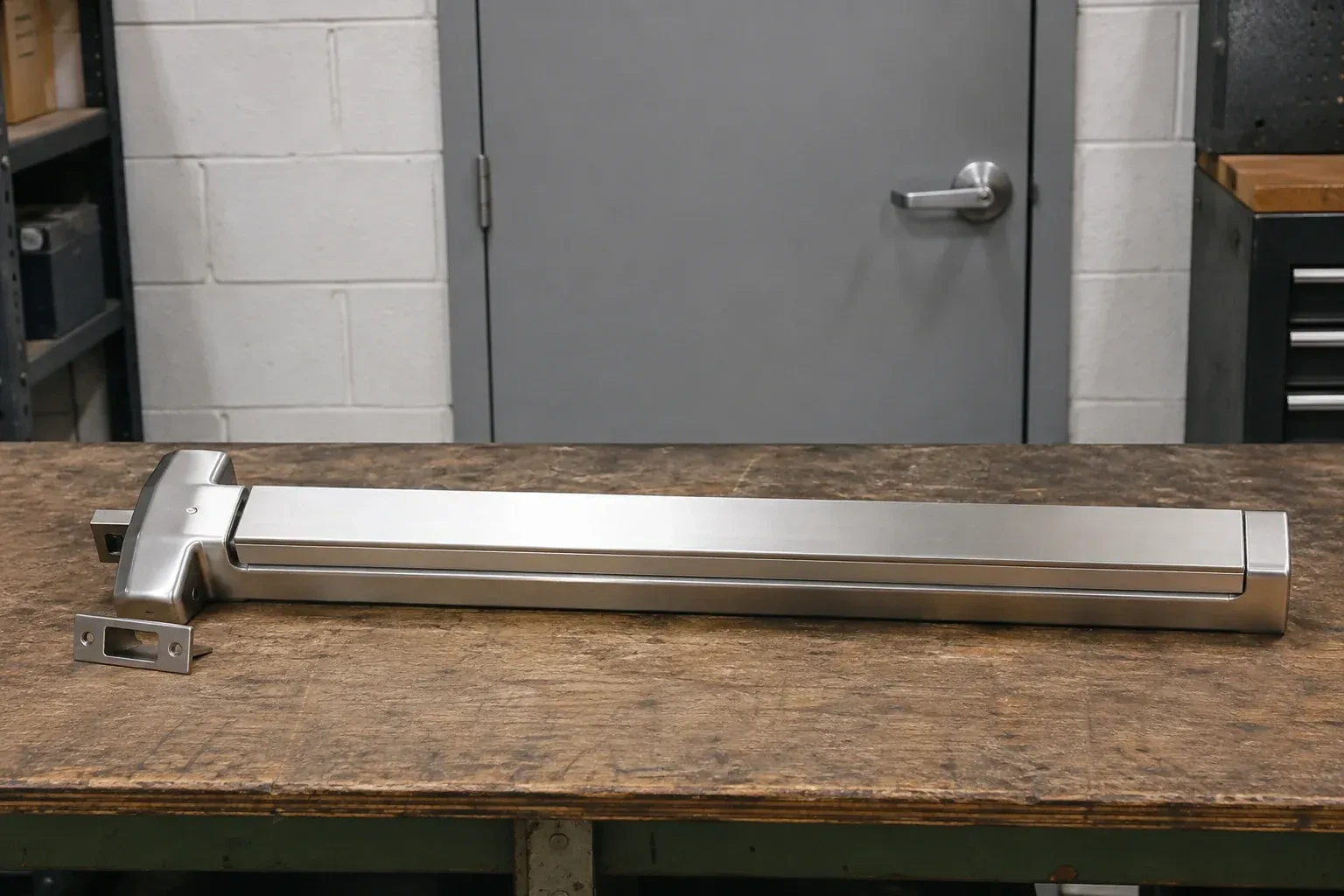
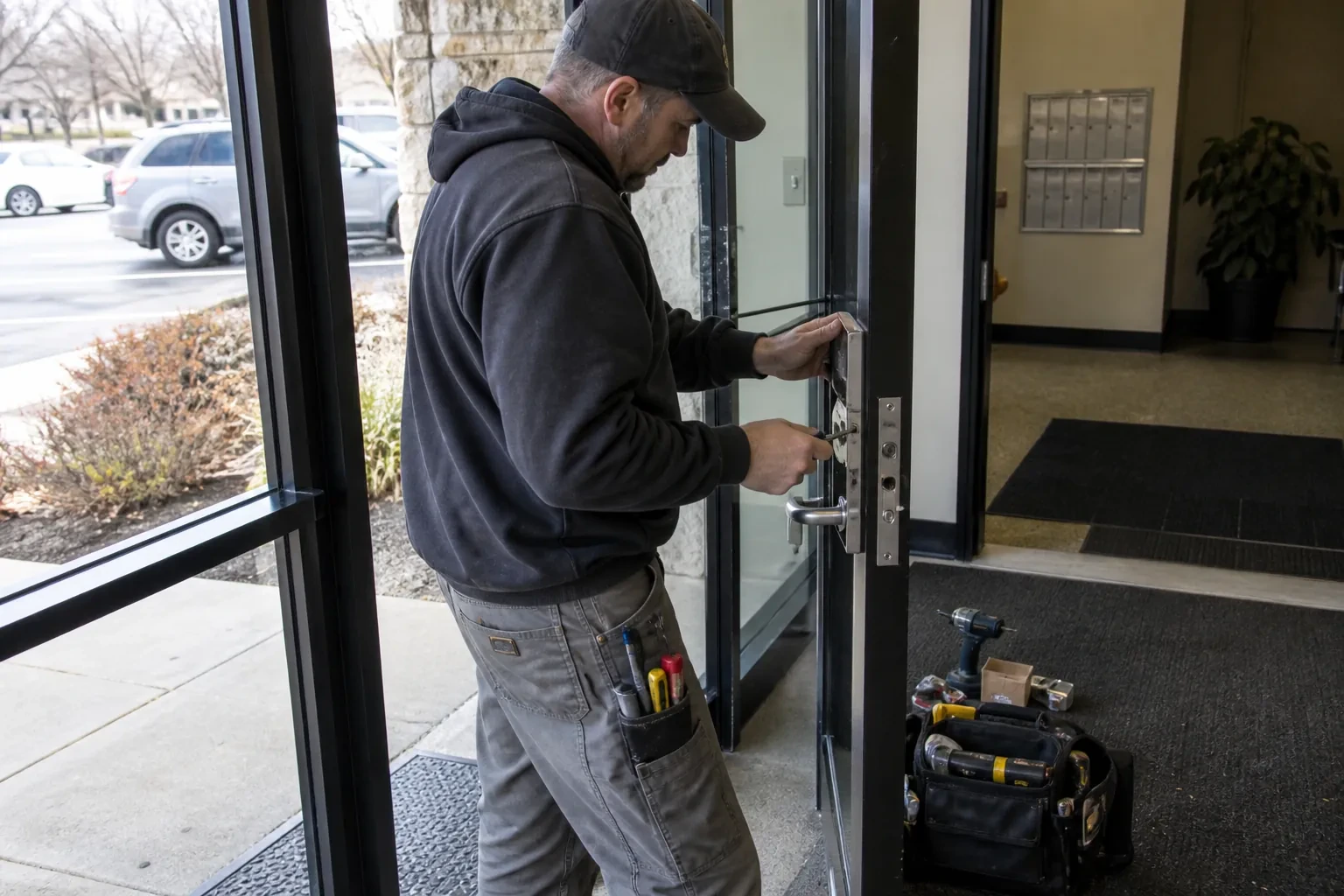
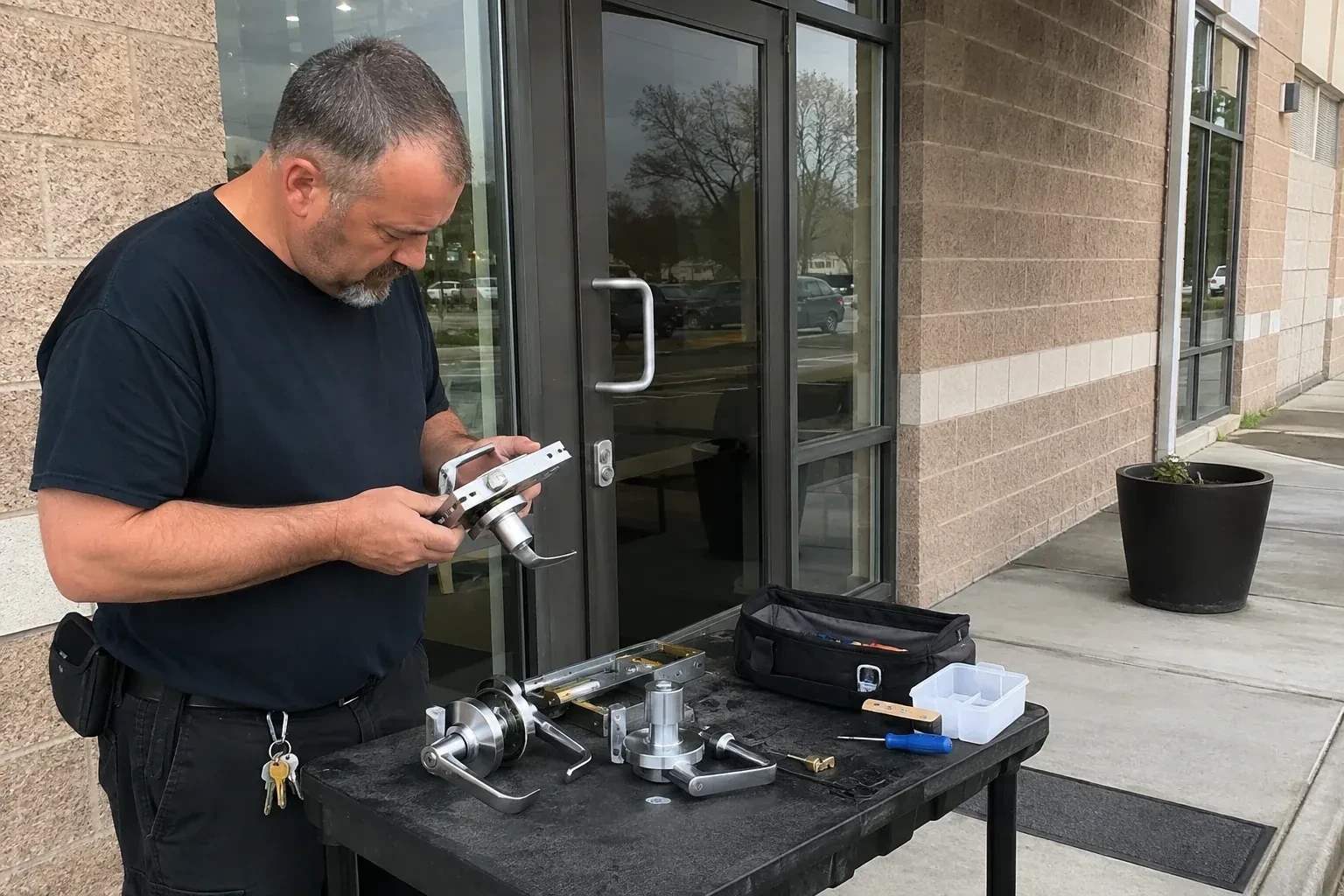
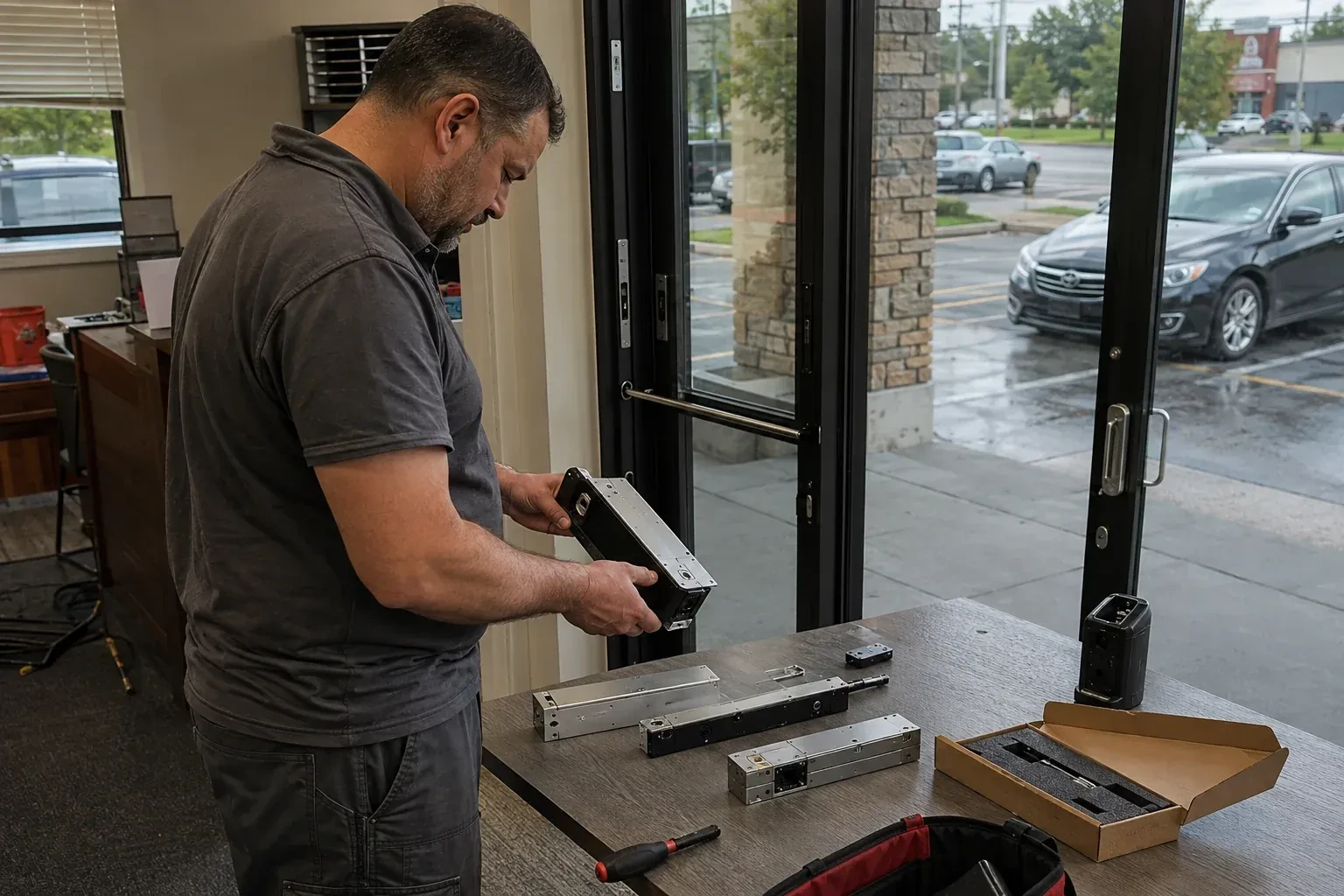
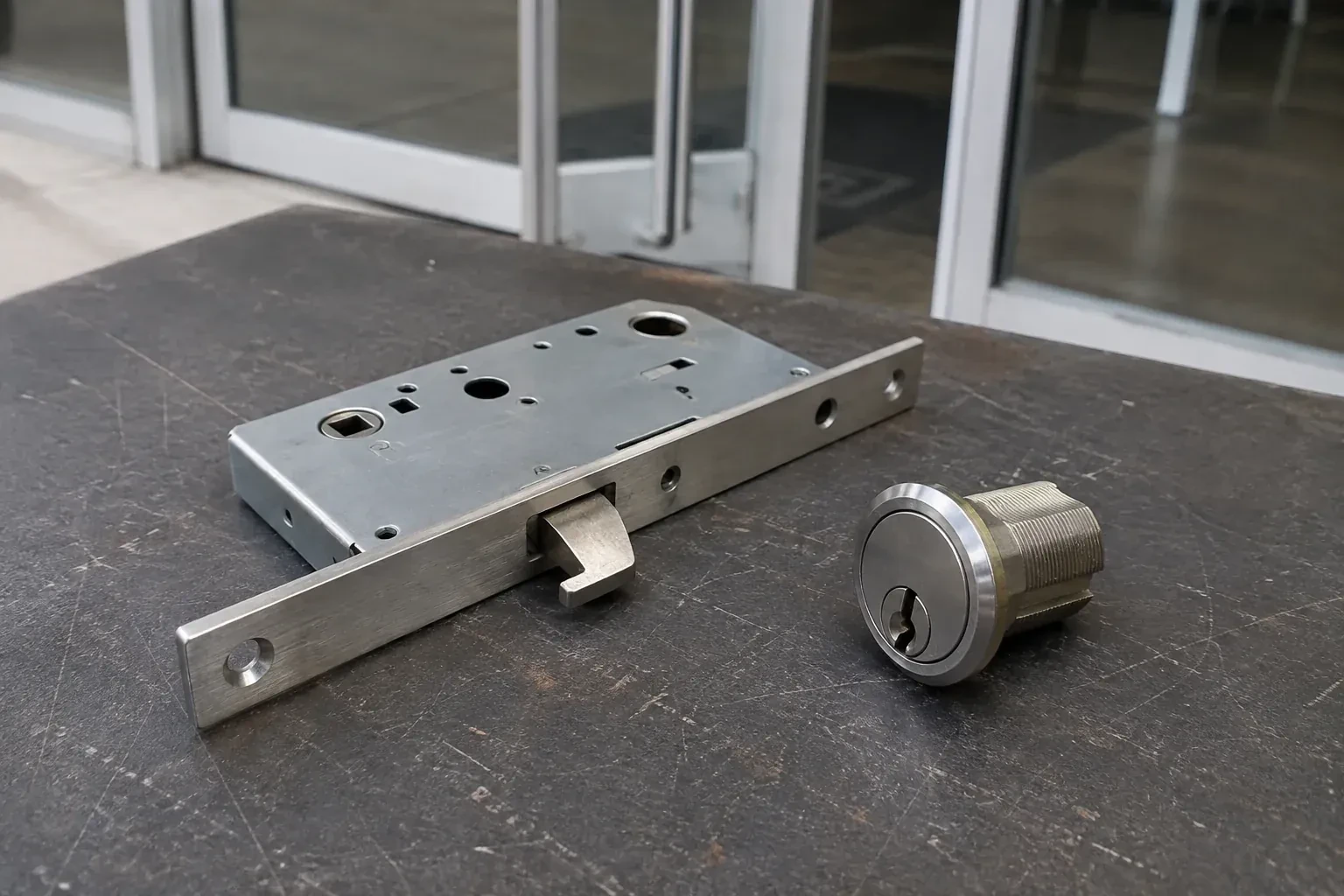
With the assessment done, the locksmith matches a device family to the door: a rim exit device for most single doors, a mortise device where a heavier-duty case suits the opening, or a vertical-rod device where latching is needed at both the top and bottom of the frame. Fire-rated openings take fire exit hardware specifically listed for that duty, never a standard panic device pressed into a role it was not built for, and listed rim fire-exit hardware covers a wide range of those openings on its own. The chosen device is matched to the door's width, handing and existing preparation before it is ordered.
- 3
A written record for the next review
The building now has a document naming every device fitted, its rating, the trim and any electrified function, and the tests each assembly passed on installation day. That record is what a fire inspector, an insurance reviewer or a new facilities manager will ask for, and having it ready saves reconstructing the history of a door from memory or from whatever sticker happens to still be on the case. It is worth keeping with the building's other life-safety paperwork.
In the van
- Strike and reinforcement
- Door closer
- Request-to-exit switch
- Signage and labels
- Outside trim (pull, lever or cylinder)
What affects the quote
- 1
Signage and labelling
Any exit signage or alarm labelling the opening needs is a small addition on its own, but it is named in the quote rather than assumed to already exist on the door.
- 2
Door and frame condition
A door that has sagged, a frame that has shifted, or a strike pocket that no longer lines up needs correcting before hardware is fitted, which adds its own line to the quote.
- 3
Outside trim selected
A plain pull is the simplest outside trim. A lever with a key cylinder, or a trim matched to other hardware finishes in the building, involves more parts and more fitting time.
Same fees day, night or weekend.
Panic & Exit Hardware: questions
Who is responsible for keeping the hardware compliant?
The building owner or the party the owner assigns, often a facilities manager, is responsible for keeping exit hardware in working order and for the fire door assembly testing that goes with it. A locksmith installs and services the hardware and can keep records on the owner's behalf, but the ongoing duty to maintain the assembly sits with whoever holds the building.
How is occupant load actually counted for this decision?
Occupant load is calculated from the floor area and the intended use of the room, using published factors for that occupancy type, rather than a headcount taken on a busy night. A building official or a locksmith familiar with the calculation can work through it for a specific room, and the result is what decides whether the exit doors serving that room need a releasing device.
What does the finished installation actually prove to an inspector?
It proves that a specific device, rated for the opening it sits on, releases under an appropriate force, latches fully, and has been tested and recorded on a given date. The record travels with the building, so a fire inspector reviewing the space later is looking at a documented history of that exit rather than testing hardware with no known installation date or specification.
Panic & Exit Hardware near you
Toronto, Ontario
Toronto information
- Town
- Toronto, Ontario
- In business
- 20 years
- Hours
- Open 24/7 · nights, weekends and holidays, same fees
- Phone
- (289) 301-2168
- Visits
- On-site assessment preferred. Request a visit or call.
What the census means at the door
58%
Older homes. About 58% of homes in Toronto were built in 1980 or earlier, according to the 2021 Census.
Older housing means older frames. Wood that has settled for years leaves strikes slightly out of line, so a bolt drags or needs a lift of the handle. A locksmith expects this and brings the shims, longer screws and strike plates to correct it.
23%
Single-detached houses make up about 23% of homes in Toronto (2021 Census).
Attached housing turns over more often than detached, so rekeying between tenants or owners is a constant. Because suite doors tend to be standard, the job is usually a straightforward pin change and a fresh set of keys cut on site.
Nearby
Open 24/7
Request a visit
Someone at the front counter always has to unlock the side door by hand before the lunch rush, because the round doorknob out there was never meant to be an exit for a room this size.
Call now · open 24/7(289) 301-2168- On-site assessment preferred
- Same fees day, night or weekend
- 20 years in business