Emergency Car keys · Toronto
Car Lockout Service
It is a January morning, minus twenty with the wind, and the key will not enter the door cylinder. Yesterday's slush ran into the keyhole and froze overnight.
Call now · open 24/7(289) 301-2168In plain words
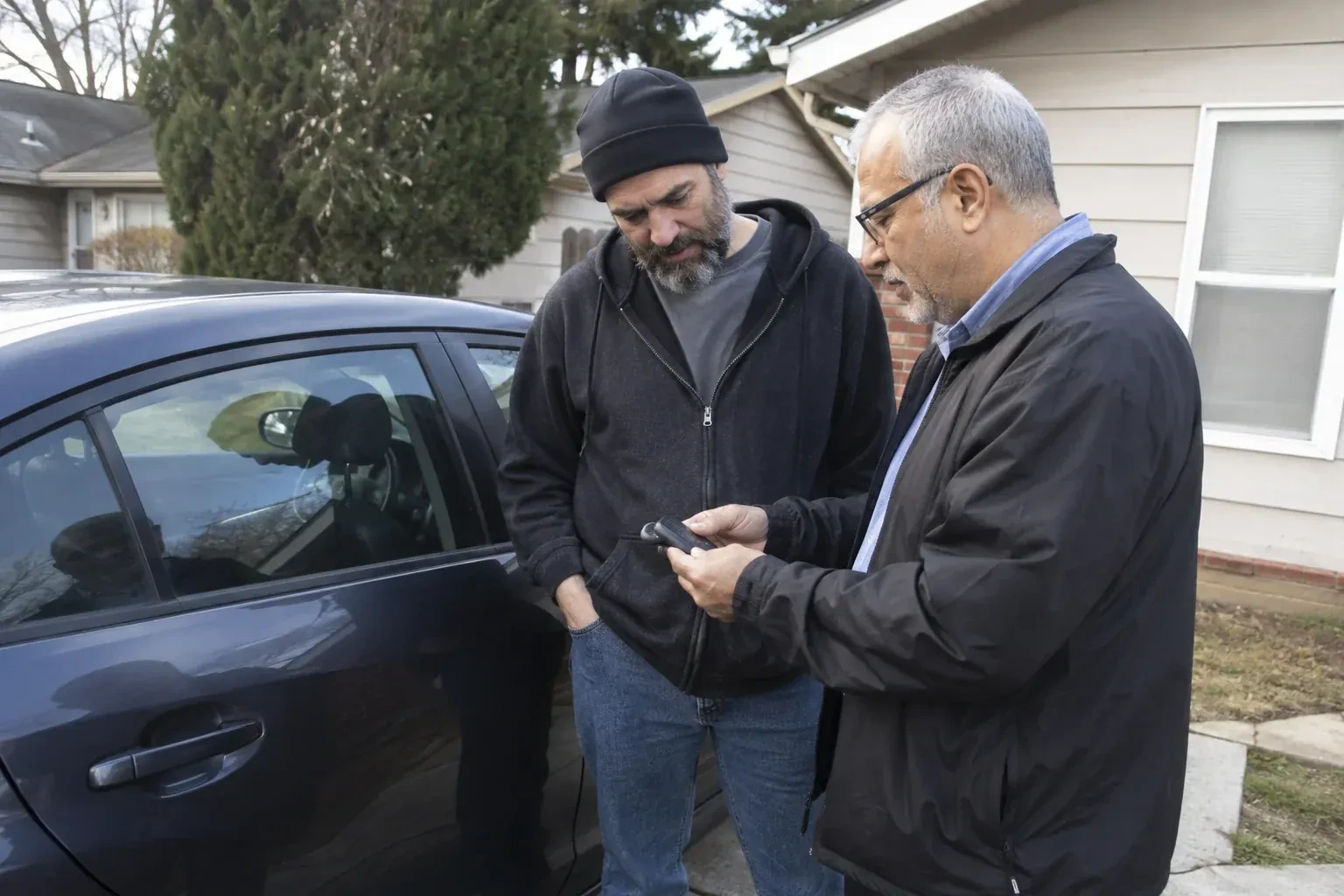
Safety and authorisation frame every car lockout, and both are on your side. Confirming that you own the vehicle, or have its owner's say-so, protects your car from being opened for anyone else who might one day claim it; photo identification with the vehicle permit or a rental agreement settles it, and the check can finish once the glovebox is reachable. On a highway shoulder the locksmith parks as a shield, works from the side away from traffic and keeps hazard lights going, following the same rules the provincial driver's handbook gives stranded drivers. A calm, methodical opening is the outcome of both.
How the visit goesYou reached the parking lot after a long hike and the pocket that held your car key is empty. Somewhere along ten kilometres of trail is the only key you own, and the car, your wallet and your dry clothes are all locked behind glass.
Car Lockout Service · Toronto
How the visit goes
- 1
Condition of the door, glass and seals
Before any tool goes near the car, the locksmith walks around it and looks. Is a window down a finger's width? Does a door have a dent or a lifted seal that changes how a wedge would sit? Has the paint been scratched or the glass chipped already? Is there a frameless window, which needs a gentler approach than a full frame? Existing damage is pointed out to you and noted so there is no question later about what was there before work began. A door that has already been prised by a bystander is treated with extra care, since a bent frame can hold moisture and whistle at speed afterwards.
- 2
Wedge and reach, done carefully
On most cars with the keys in the cabin, the opening is a matter of a few millimetres. A protective guard goes over the door edge, a plastic wedge starts a gap at the top rear corner of the frame, and the air wedge takes over, inflated in small pumps so the door flexes evenly rather than at one point. Through the gap goes a padded long-reach tool, guided by eye and sometimes a torch or mirror, to press the unlock switch, tug the interior handle or hook the keys themselves. The wedge is deflated slowly, the guard removed, and the door swings open with its seal and paint as they were.
- 3
Ready for the next freeze
After a winter lockout the car is set up to take the next cold snap in stride. The door cylinder has been dried and given whatever lubricant the vehicle maker specifies for cold weather, and the door seals have been wiped and treated with silicone so they release instead of bonding to the frame. A small tube of lock de-icer for a coat pocket, never left in the locked car, covers the mornings a keyway ices over. Parking nose-out of the wind where you can, keeping the driver's door seal clean of slush, and swapping the fob battery each autumn are the small habits that carry a car through to spring.
In the van
- Broken key extractors
- Automotive pick and decoder
- Fob coin batteries
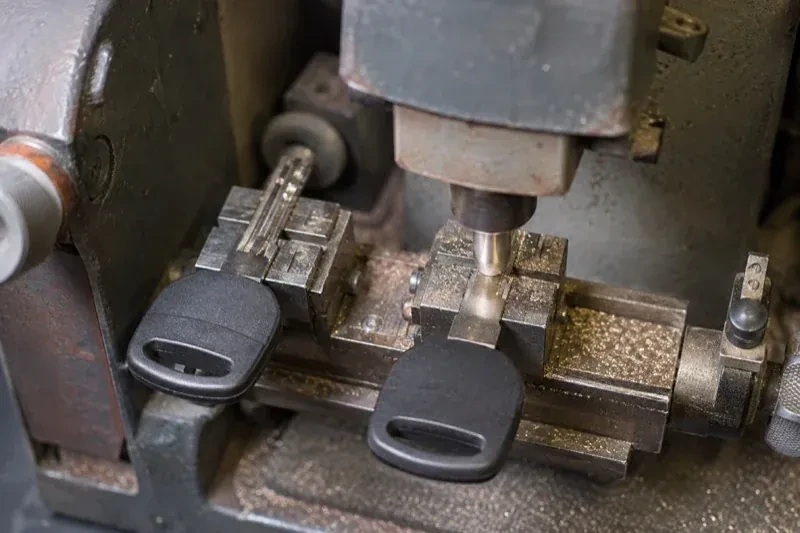
- Key cutting machine
- Twelve-volt jump pack
What affects the quote
- 1
Number of keys made
One replacement gets you home; a second cut and programmed at the same time saves a future call. Each key is counted into the quote individually, so say how many you want.
- 2
Programming through the diagnostic port
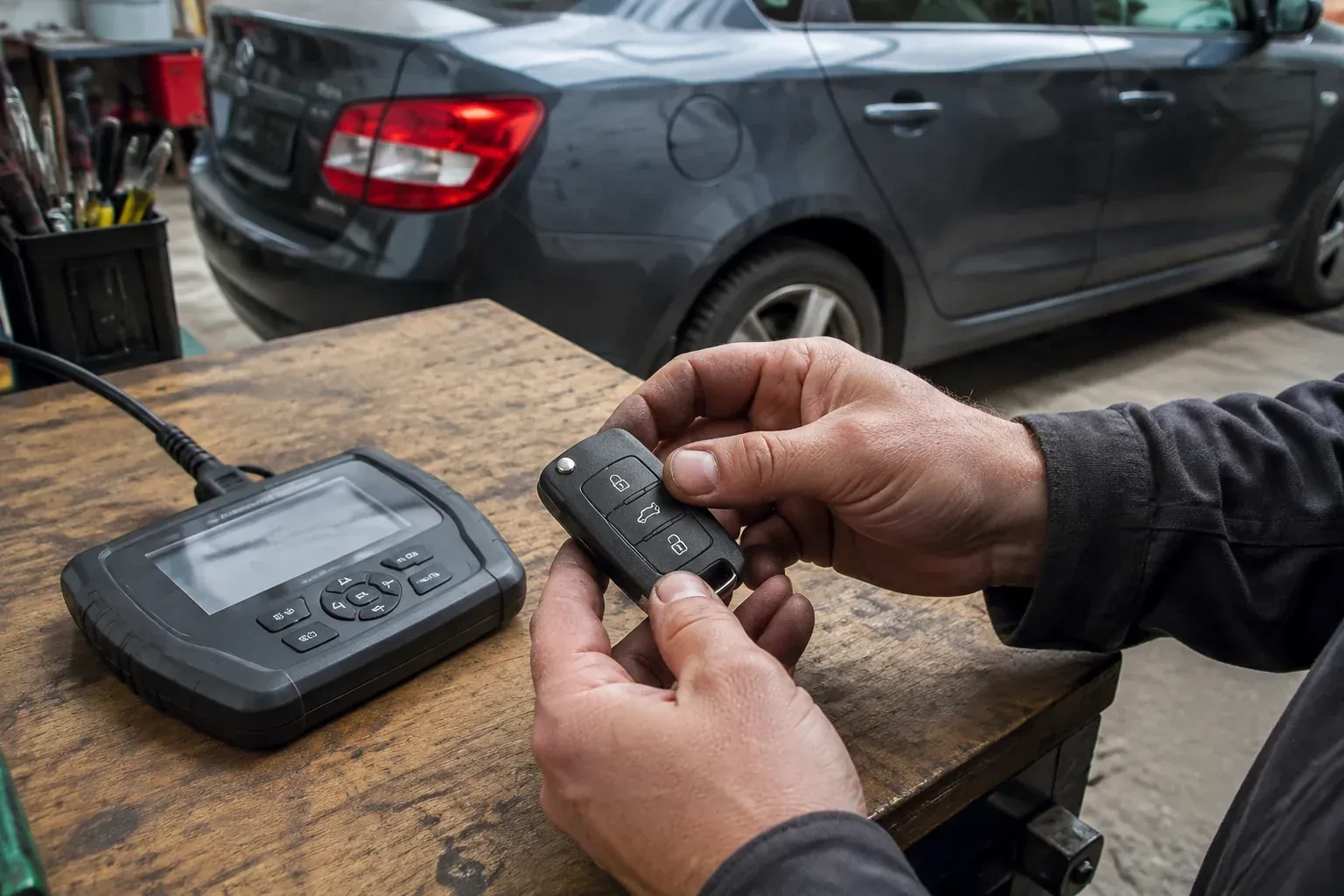
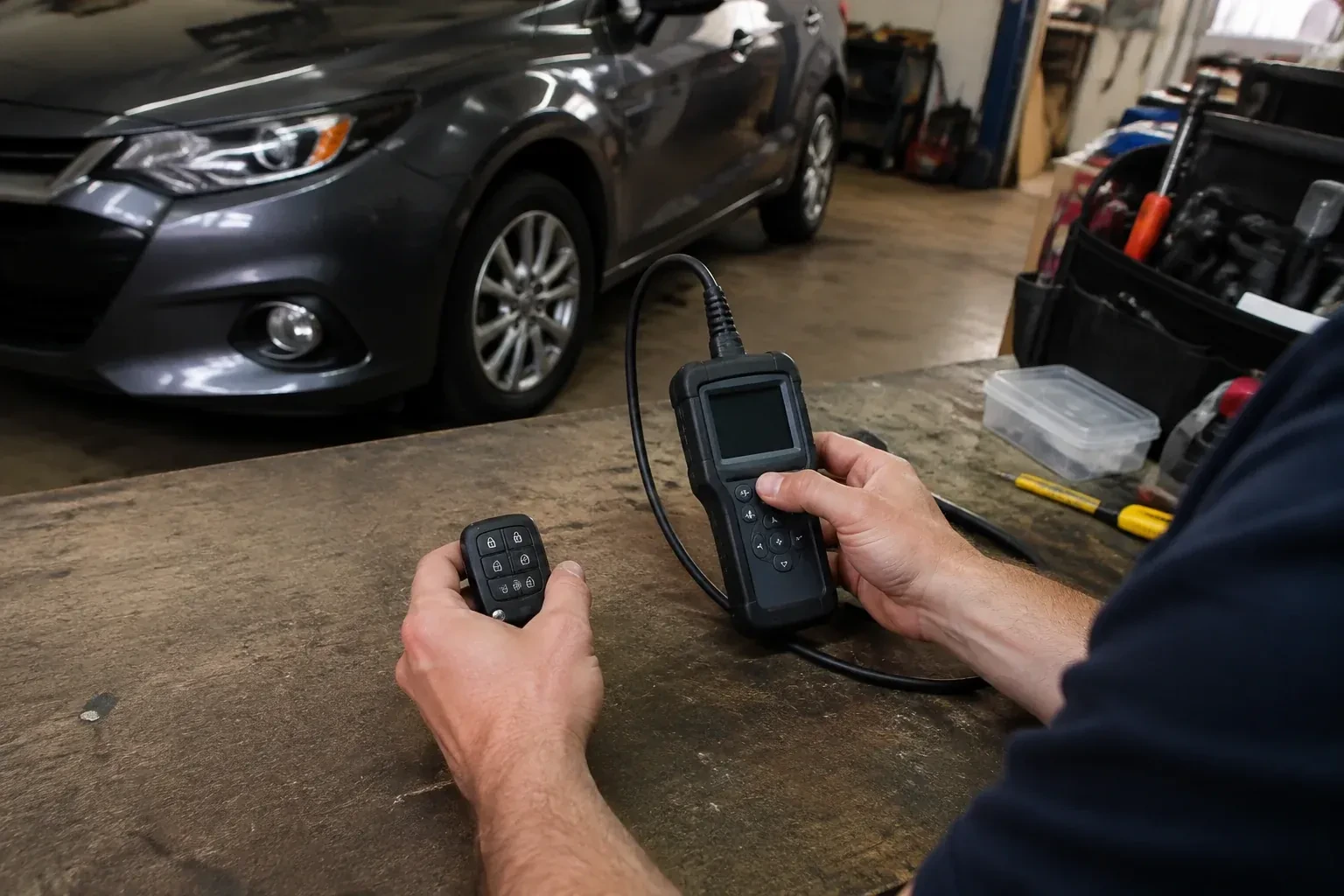
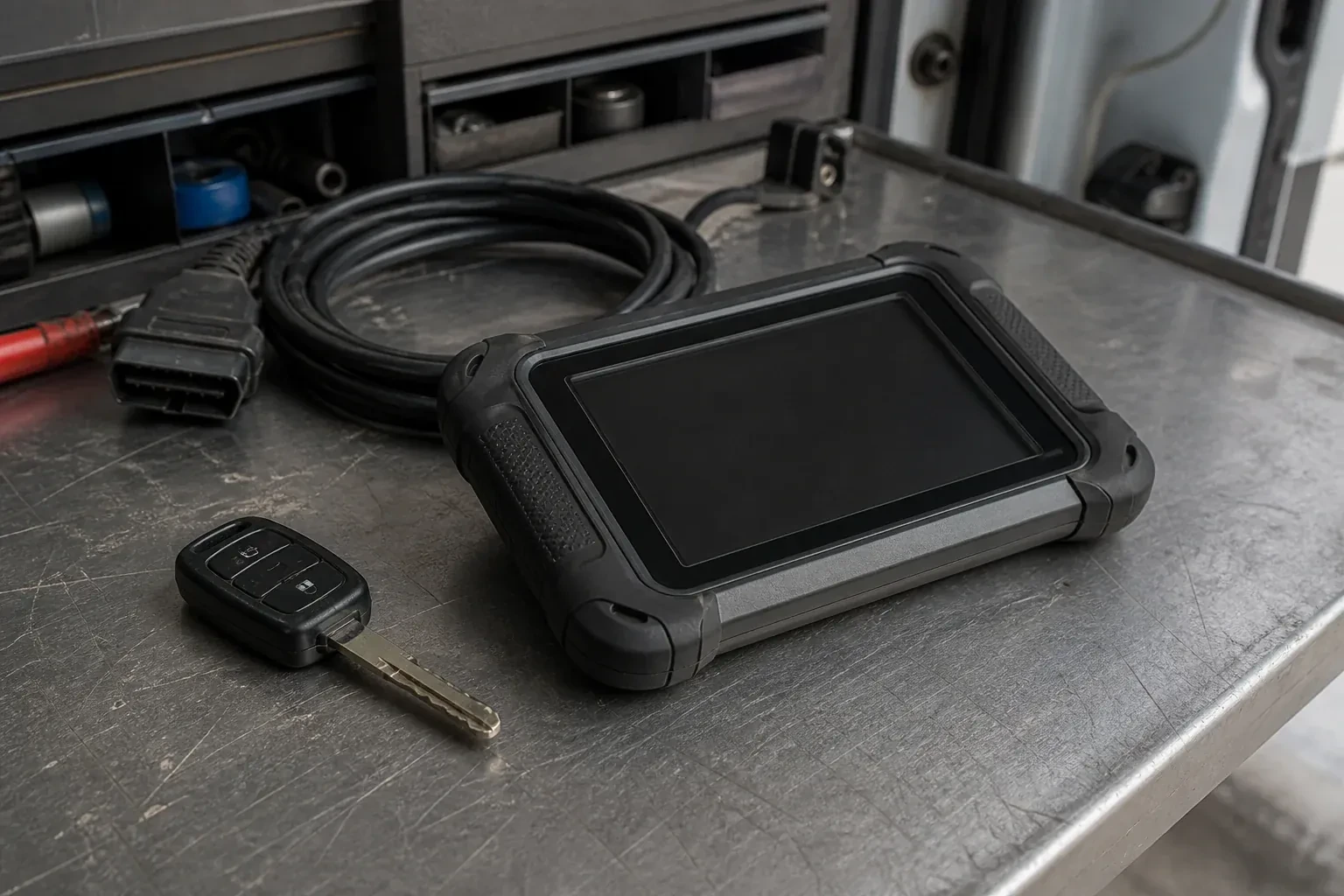
Pairing a new key or fob to the immobiliser is skilled work with specialised equipment, and some models need security access from the manufacturer. That step is quoted separately from cutting the blade.
- 3
Type of key or fob
A plain metal key, a transponder key with a chip, a remote-head key and a proximity fob each cost different amounts as parts, and each takes its own programming step when one has to be replaced.
Same fees day, night or weekend.
Car Lockout Service: questions
Should I call a tow truck or a locksmith?
For keys locked in, lost or broken, a locksmith opens the car where it stands and can usually make a key on the spot, so the car drives away. A tow moves the car to a shop but leaves the key problem unsolved. Roadside clubs send a locksmith for lockouts and reserve towing for cars that cannot be made drivable. If the shoulder is unsafe to work on, a short tow first may be sensible.
The whole car is dead, not just the fob. Can you still open it?
Yes. When the interior lights, horn and remote are all silent, the car's own twelve-volt battery has run flat, and the fob has nothing to talk to. The door is opened through the mechanical cylinder or with a wedge and reach tool; loose or corroded connections and other faults can look the same as a dead battery, so it is checked and confirmed safe before a jump pack brings the car back to life. If the battery will not hold a charge, you will know before the locksmith leaves.
I have lost my only key. Can a locksmith make a new one at the roadside?
For most cars, yes. After the car is opened, the door cylinder is decoded to read the cuts, or the key code is drawn from the vehicle records against your proof of ownership, and a blade is cut in the van. A transponder key or fob is then programmed through the diagnostic port so the engine will start. Some newer or high-security models need dealer-only parts; you are told that up front rather than after.
Car Keys
Bigger photo, sooner job: Emergency Book soon Plan ahead
Car Lockout Service near you
Toronto, Ontario
Toronto information
- Town
- Toronto, Ontario
- In business
- 20 years
- Hours
- Open 24/7 · nights, weekends and holidays, same fees
- Phone
- (289) 301-2168
- Visits
- On-site assessment preferred. Request a visit or call.
What the census means at the door
58%
Older homes. About 58% of homes in Toronto were built in 1980 or earlier, according to the 2021 Census.
Older housing means older frames. Wood that has settled for years leaves strikes slightly out of line, so a bolt drags or needs a lift of the handle. A locksmith expects this and brings the shims, longer screws and strike plates to correct it.
23%
Single-detached houses make up about 23% of homes in Toronto (2021 Census).
Attached housing turns over more often than detached, so rekeying between tenants or owners is a constant. Because suite doors tend to be standard, the job is usually a straightforward pin change and a fresh set of keys cut on site.
Nearby
Open 24/7
Request a visit
It is a January morning, minus twenty with the wind, and the key will not enter the door cylinder.
Call now · open 24/7(289) 301-2168- On-site assessment preferred
- Same fees day, night or weekend
- 20 years in business