Emergency Car keys · Toronto
Car Key Replacement
Minus twenty outside, the fob button does nothing, and the door keyhole has a crust of road salt over it because you have not used a metal key in that car since the day you bought it.
Call now · open 24/7(289) 301-2168In plain words
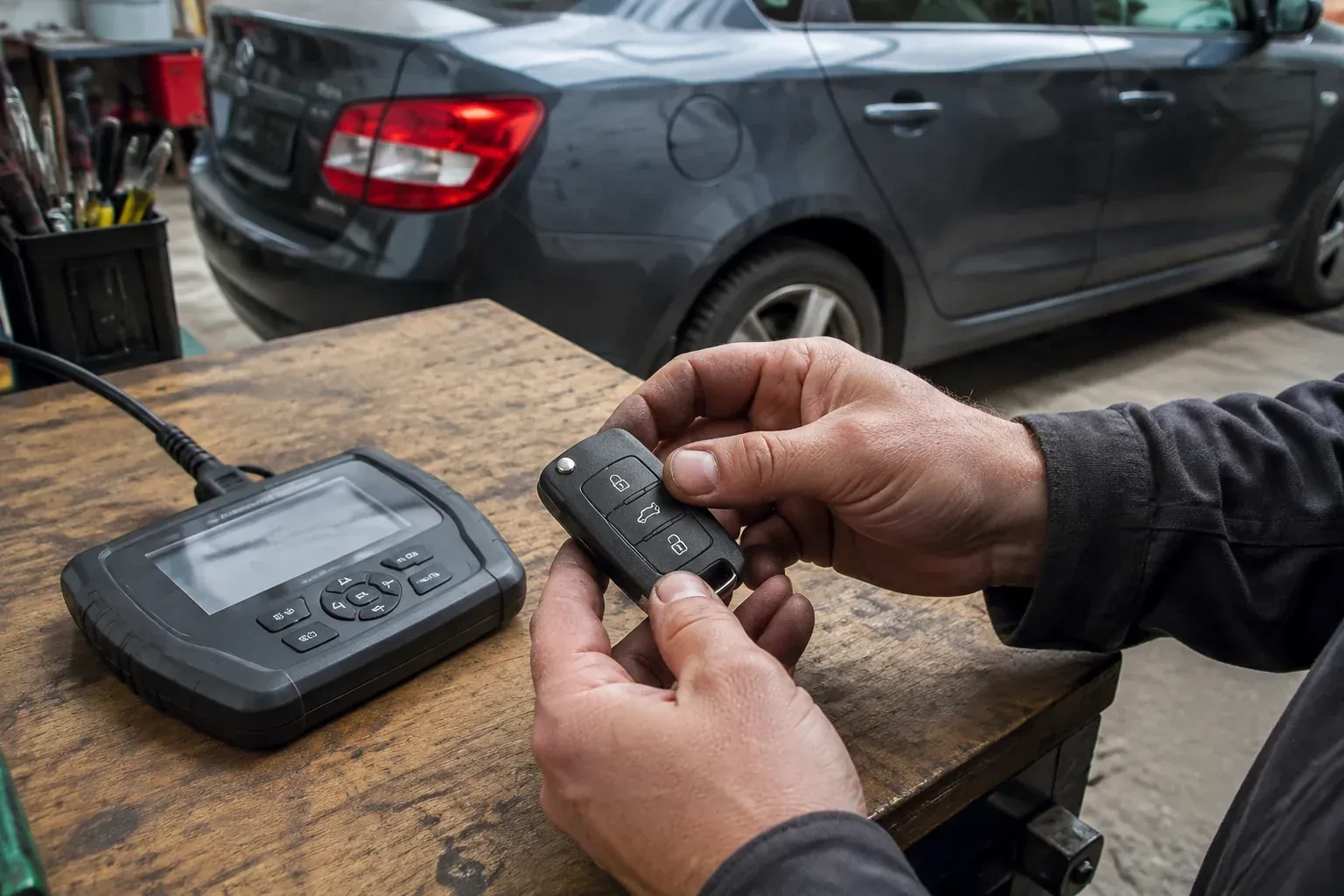
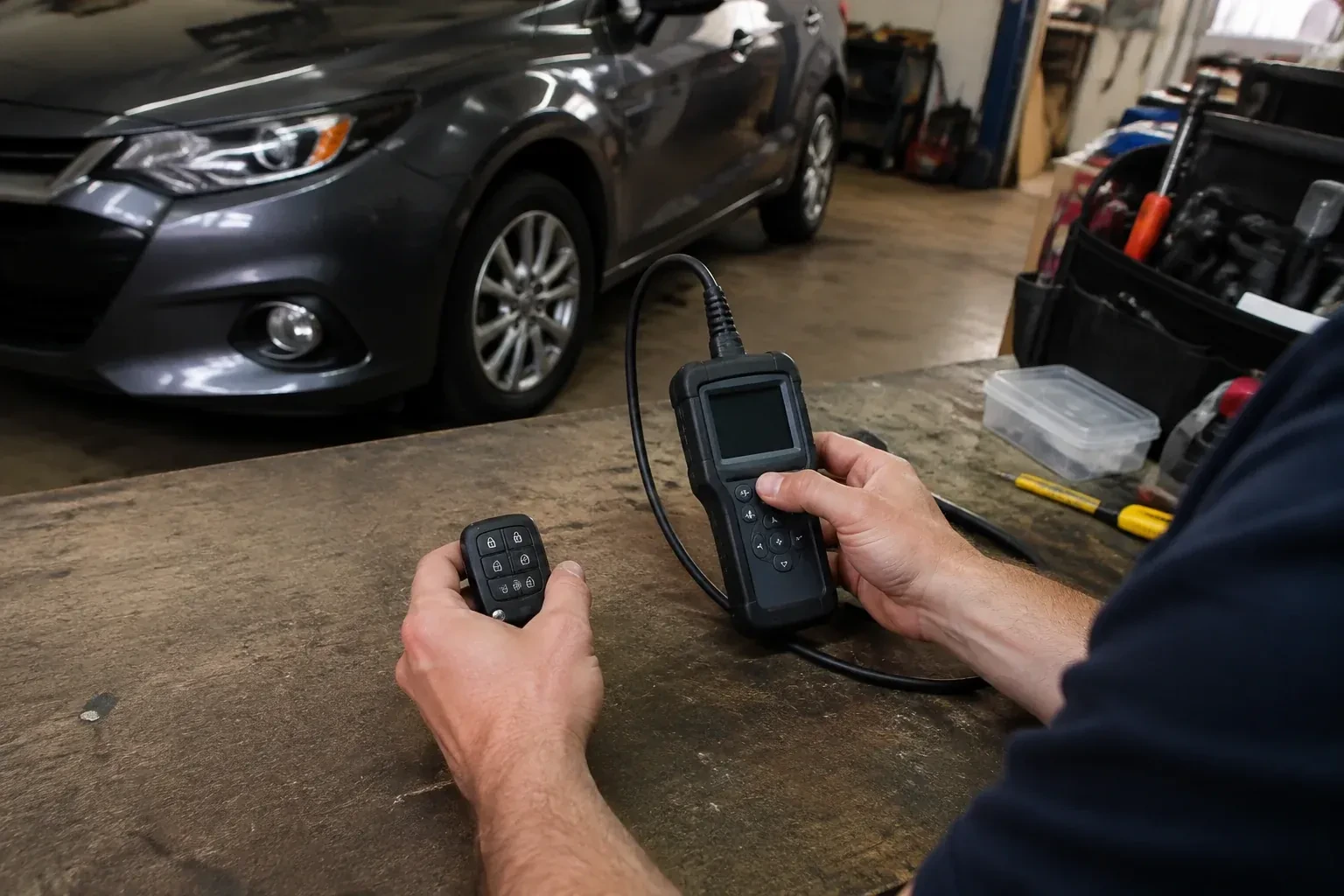
It helps to think of a car key as several parts sharing one case. The metal blade is the mechanical part; it opens the doors and, on older cars, turns the ignition. The transponder is a small chip with no battery that answers the immobilizer when the key is near the ignition; without the right answer the engine refuses to run. The remote is a separate radio circuit with its own battery that works the lock, unlock, trunk and panic buttons. A proximity fob adds hands-free entry and push-button start. Replacement can involve any or all of these, and a good visit begins by working out which ones you need.
How the visit goesThe key snapped at the head while you were turning it in a stiff, frosty door lock. Half the blade is in your hand, the rest is inside the lock, and the plastic head still lights up when you press a button.
Car Key Replacement · Toronto
How the visit goes
- 1
The locks and ignition, not only the key
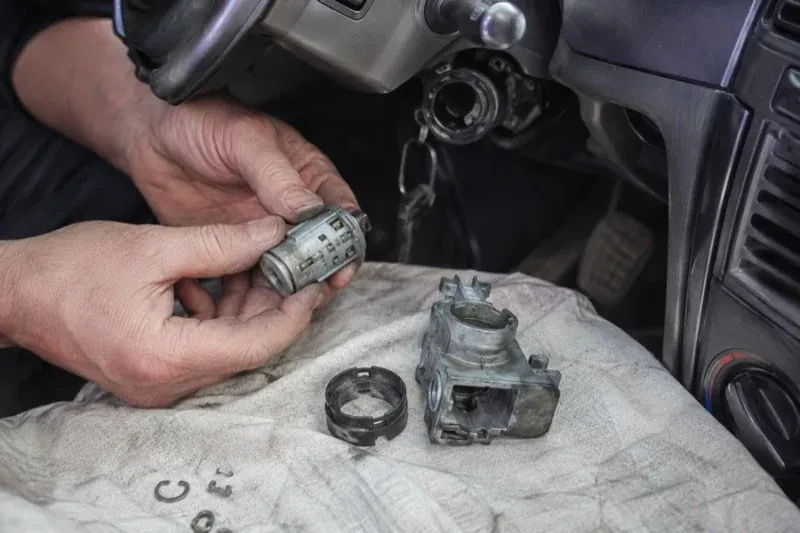
A new key is only as good as the cylinders it turns, so the check looks at the car too. A door lock that has gone unused for years on a keyless vehicle can be stiff with salt and grit; an ignition that needed a jiggle with the old key has worn wafers that will feel tight with a fresh blade; a previous replacement may have left the doors and ignition on different cuts. Aftermarket alarms and remote starters can also sit between the key and the immobilizer. Spotting these early lets the locksmith bring the right parts and explain what else the car may need so the new key feels right.
- 2
Testing every function before the handover
The visit ends with a checklist rather than a handshake. The blade is tried in the driver's door, the passenger door and the trunk lock, and in the ignition where one exists. The engine is started, allowed to run, shut off and started again. Each button is pressed and watched: lock, unlock, trunk, panic, remote start. On a proximity car, the handles are approached with the fob in a pocket and the start button is tried the same way. The spare goes through the identical routine. Anything that stays silent is sorted out on the spot, and the tally of keys the car recognizes is written down for you.
- 3
A record of what your key actually is
A car key has an identity of its own: a blade profile, a transponder type, a remote frequency and a part number, and sometimes a key code printed on a tag. The locksmith notes these for you, along with the count of keys stored in the car, so the next spare can be prepared from the details rather than from scratch. Keep the note with your insurance papers rather than in the car. If the vehicle ever changes hands, the record also lets the new owner have the old keys erased and fresh ones made without guesswork about what the car uses.
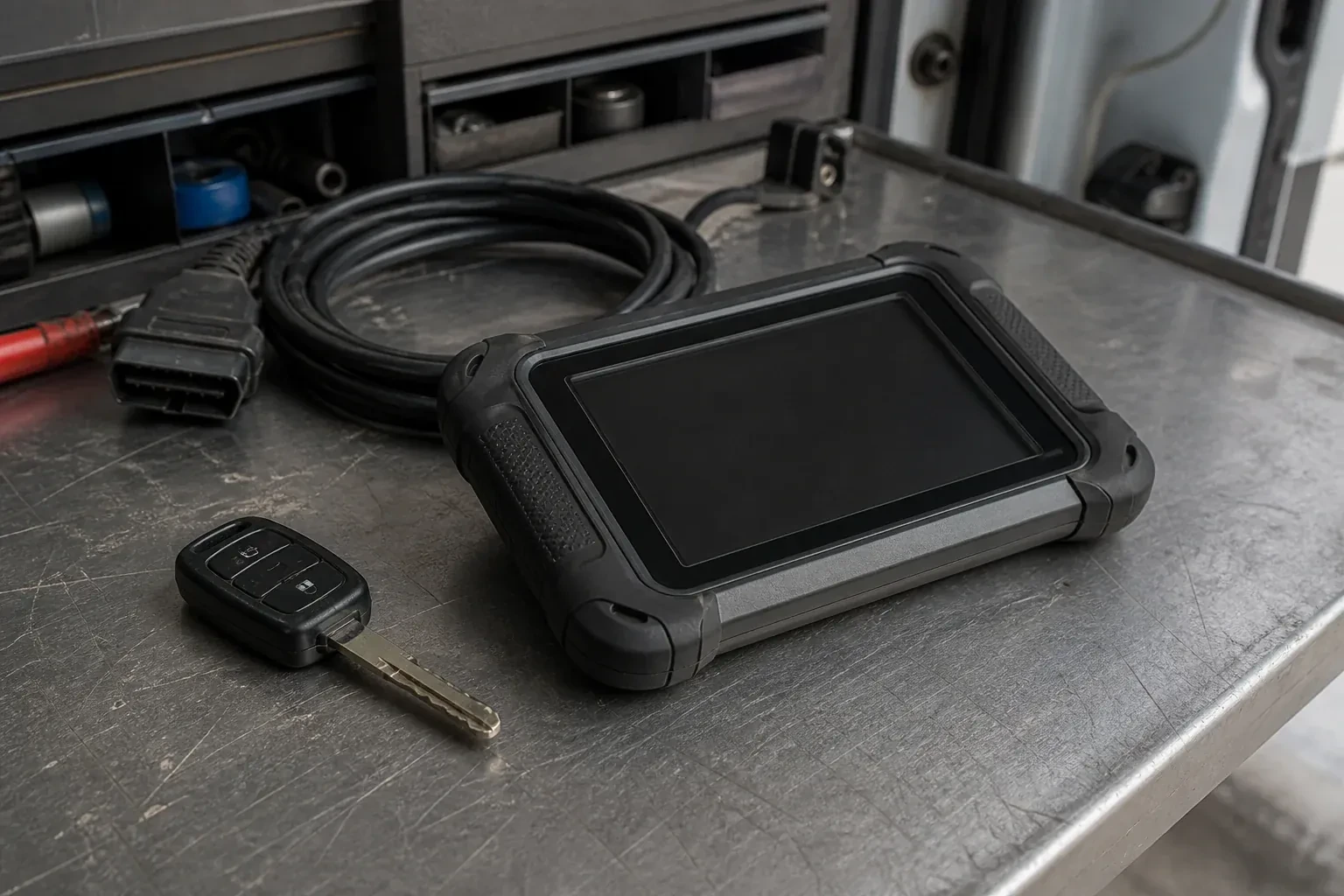
In the van
- Remote frequency tester
- OBD programming tool
- Transponder key blank
- Proximity fob with emergency blade
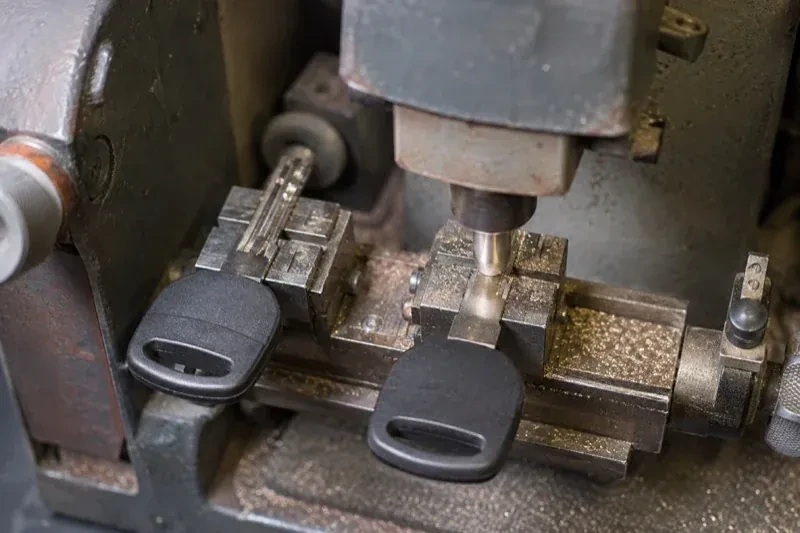
- Laser-style milling cutter
What affects the quote
- 1
Erasing the keys you no longer hold
Removing lost or stolen keys from the immobilizer during the session is a small extra step, and re-registering the keys you kept follows it. If you want the old keys silenced, say so and it is quoted.
- 2
How many keys you leave with
Each key is a blank, a cut and a programming slot, so the total follows the count. Making the spare during the same visit is usually the sensible time to do it.
- 3
Programming route the car allows
Some vehicles accept a new key through an on-board routine, most through the programming tool, and a few only through a dealer procedure. The route determines the time and the data involved, and the quote says which it is.
Same fees day, night or weekend.
Car Key Replacement: questions
Does programming a new key affect the keys I already have?
Adding a key leaves the existing keys in place; the car simply learns one more. The exception is a deliberate all-keys-lost reset or an erase you ask for, which clears every stored key and then registers only the ones you present. For that reason the locksmith asks you to bring every key you own to the visit, so each one can be re-registered and tested rather than left behind and forgotten by the car.
Does the car have to be towed to a shop?
Often not. The cutting machine, blanks and programming tool travel in the van, and the work is done where the car sits: a driveway, a parking garage, the roadside or a workplace lot. The locksmith connects to the diagnostic port under the dash and cuts and programs on the spot. An unsupported or dealer-only system may still need the vehicle to go to a dealer or a suitably equipped shop, which the VIN check flags beforehand.
What is the small metal blade inside my smart key for?
It is the emergency key. When the fob's battery is flat, or the car's own battery has died and the doors ignore the buttons, the blade unlocks the driver's door mechanically. A small release on the fob lets it slide out. On a replacement fob the locksmith cuts this blade to your door lock and shows you where the keyhole is, since on some cars it hides under a cap on the handle.
Car Keys
Bigger photo, sooner job: Emergency Book soon Plan ahead
Car Key Replacement near you
Toronto, Ontario
Toronto information
- Town
- Toronto, Ontario
- In business
- 20 years
- Hours
- Open 24/7 · nights, weekends and holidays, same fees
- Phone
- (289) 301-2168
- Visits
- On-site assessment preferred. Request a visit or call.
What the census means at the door
58%
Older homes. About 58% of homes in Toronto were built in 1980 or earlier, according to the 2021 Census.
Older housing means older frames. Wood that has settled for years leaves strikes slightly out of line, so a bolt drags or needs a lift of the handle. A locksmith expects this and brings the shims, longer screws and strike plates to correct it.
23%
Single-detached houses make up about 23% of homes in Toronto (2021 Census).
Attached housing turns over more often than detached, so rekeying between tenants or owners is a constant. Because suite doors tend to be standard, the job is usually a straightforward pin change and a fresh set of keys cut on site.
Nearby
Open 24/7
Request a visit
Minus twenty outside, the fob button does nothing, and the door keyhole has a crust of road salt over it because you have not used a metal key in that car since the day you bought it.
Call now · open 24/7(289) 301-2168- On-site assessment preferred
- Same fees day, night or weekend
- 20 years in business