Change or rekey · Toronto
Lock Replacement & Upgrade
Every morning the front door key needs the same little dance: push in, lift, wiggle, turn. It has been getting worse for a year, and this week it took three tries in the cold before the deadbolt finally gave.
Call now · open 24/7(289) 301-2168In plain words
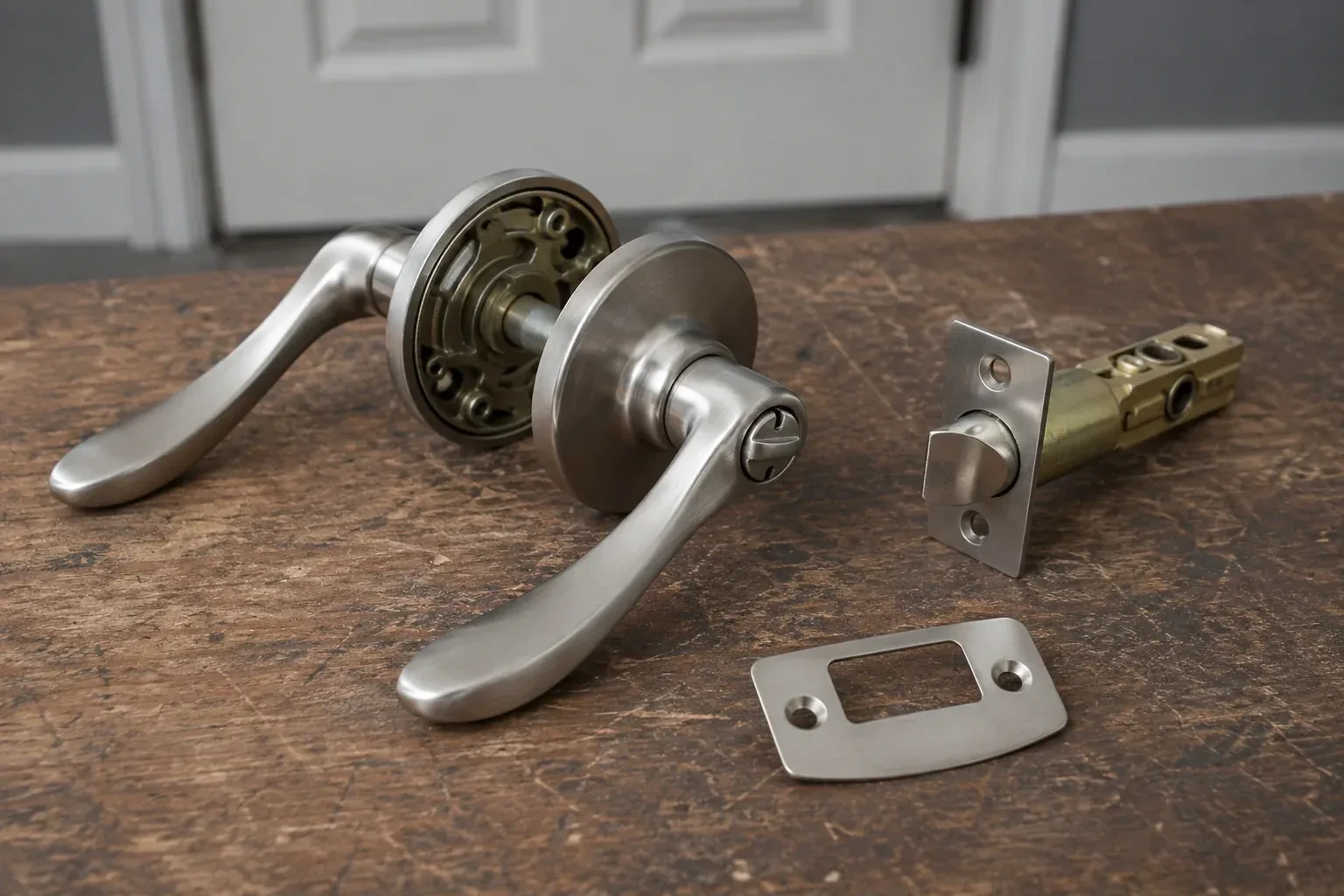
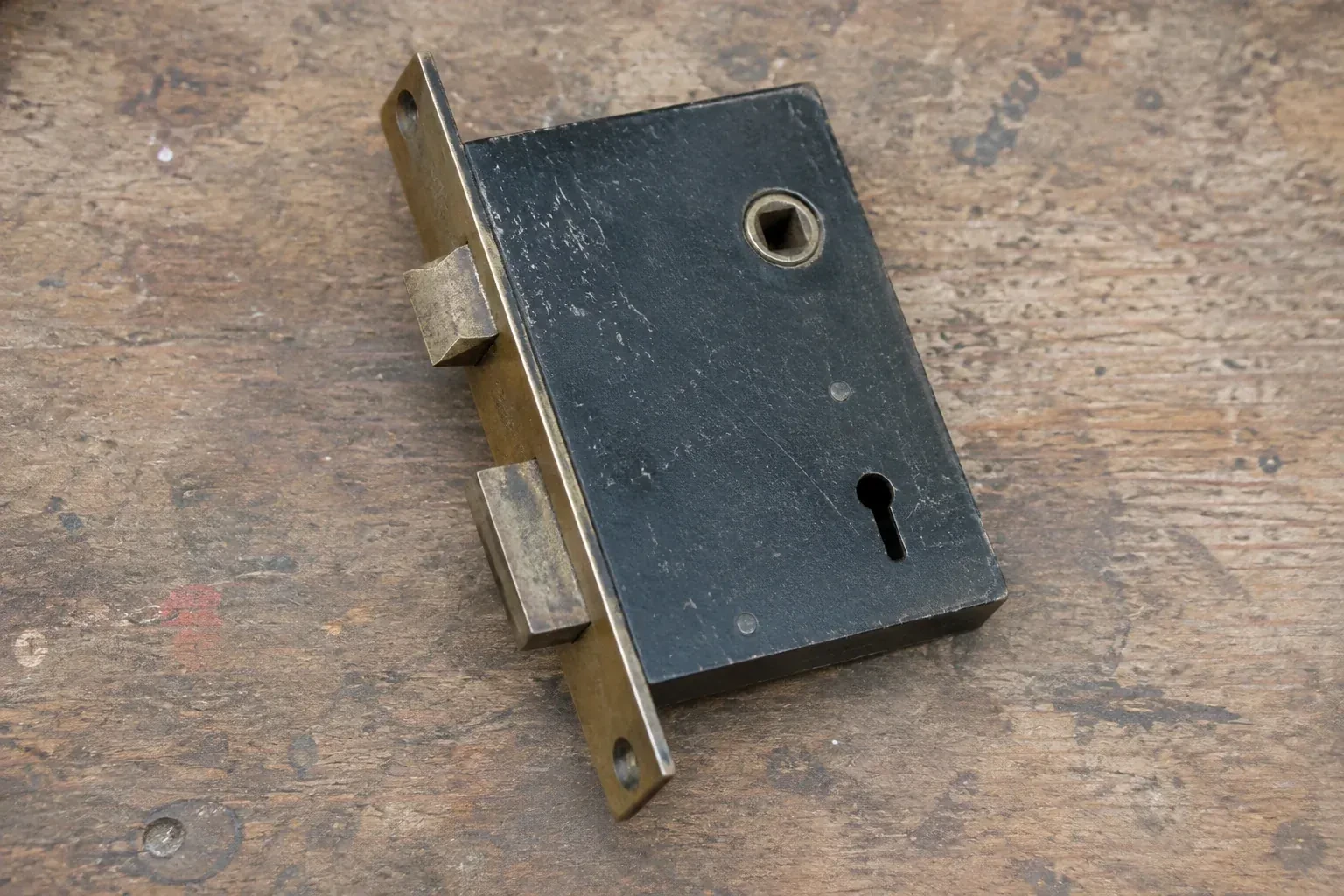
A replacement lock has to fit holes that already exist, and that is where the visit begins. The locksmith measures the backset, the distance from the door edge to the centre of the bore, which on most doors is 60 or 70 millimetres, checks the cross-bore diameter and edge-bore size, notes door thickness and handing, and looks at the strike cut-out. Most residential hardware is made to these standard preparations, so the new lock usually drops into place with no new drilling. Where a mortise lock or a thick door departs from the norm, filler plates, extension kits or a careful new bore bring the door up to standard.
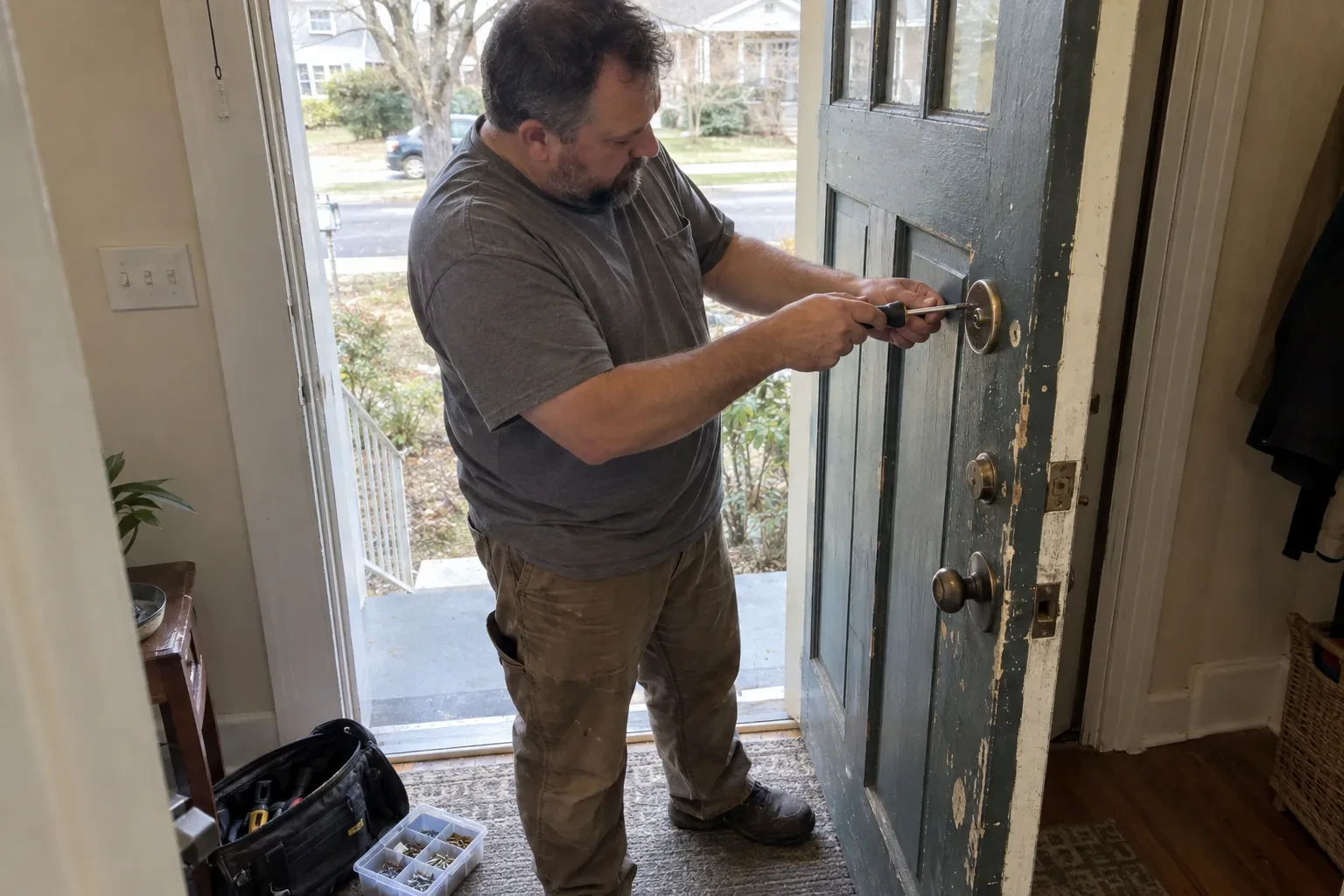
How the visit goesThe brass handleset has gone blotchy and green where the winter salt reaches it, and the coating on the deadbolt is lifting in flakes. It still locks, but it looks tired beside the fresh paint on the door.
Lock Replacement & Upgrade · Toronto
How the visit goes
- 1
Exposure, weather and finish
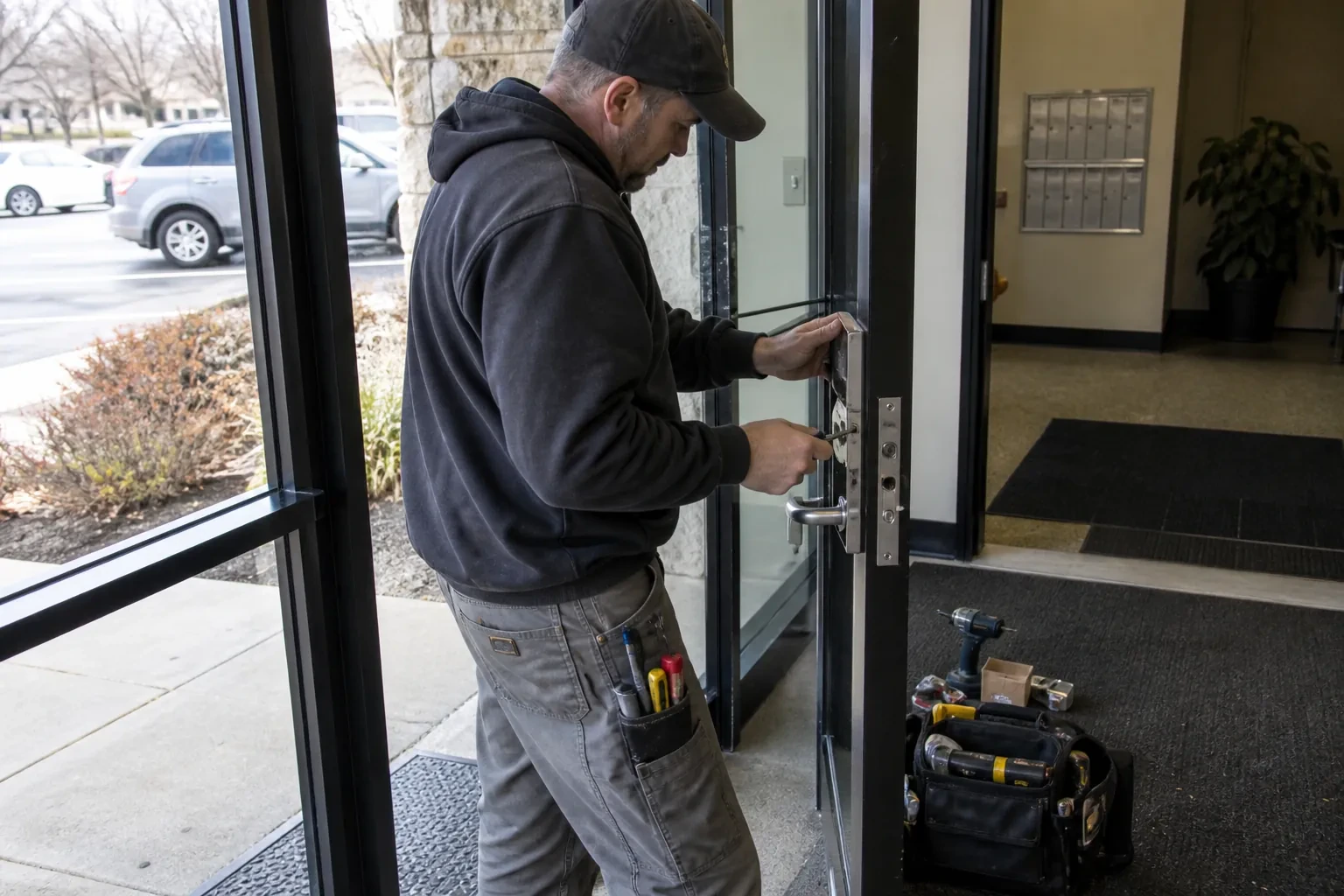
The locksmith looks at where the door lives. A side entrance beside a salted driveway, a south-facing front door in full sun and a sheltered porch each treat a finish differently, and the residential hardware label scores finish durability as its own category for exactly this reason. Existing hardware is examined for pitting, peeling and green bloom, which shows how hard the spot is on metal. That guides the choice between a PVD brass, a satin nickel, a powder-coated black or a stainless product, and whether a storm door or a small hood would help. Matching the rest of the entrance comes last, once the finish will survive the location.
- 2
Installing a keypad or smart deadbolt
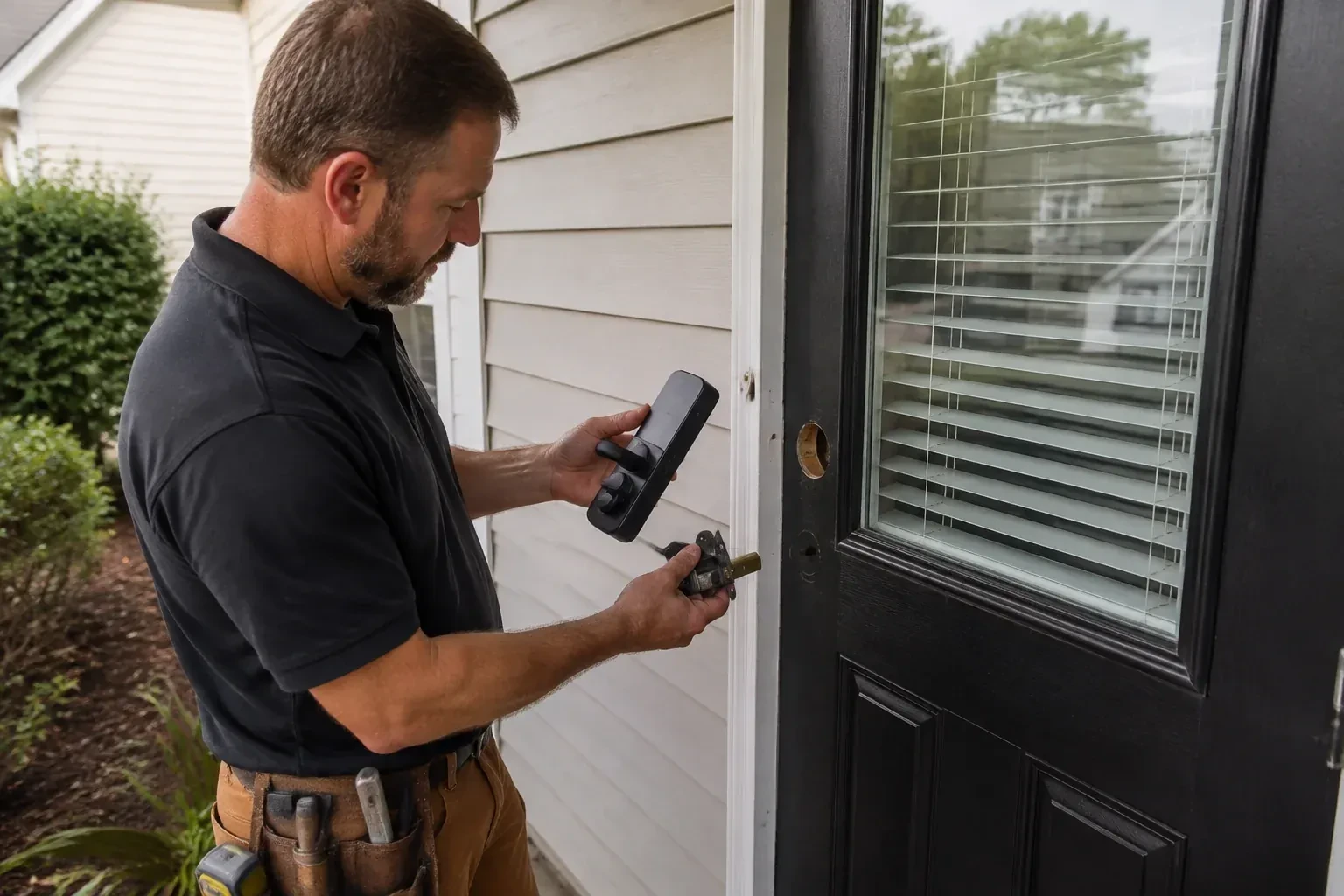
A smart lock is fitted like any deadbolt, then brought to life. The bolt and exterior keypad go on first, the interior module with its battery pack after, and the door is closed so the lock can learn where the bolt sits; a bolt that meets resistance in the strike is corrected before pairing, because a straining motor drains batteries and fails early. Codes are programmed for each person, auto-lock and sound settings are set to your liking, any phone or hub pairing is completed, and the mechanical override cylinder is tested with its key. Fresh batteries go in last.
- 3
A record of what went on the door
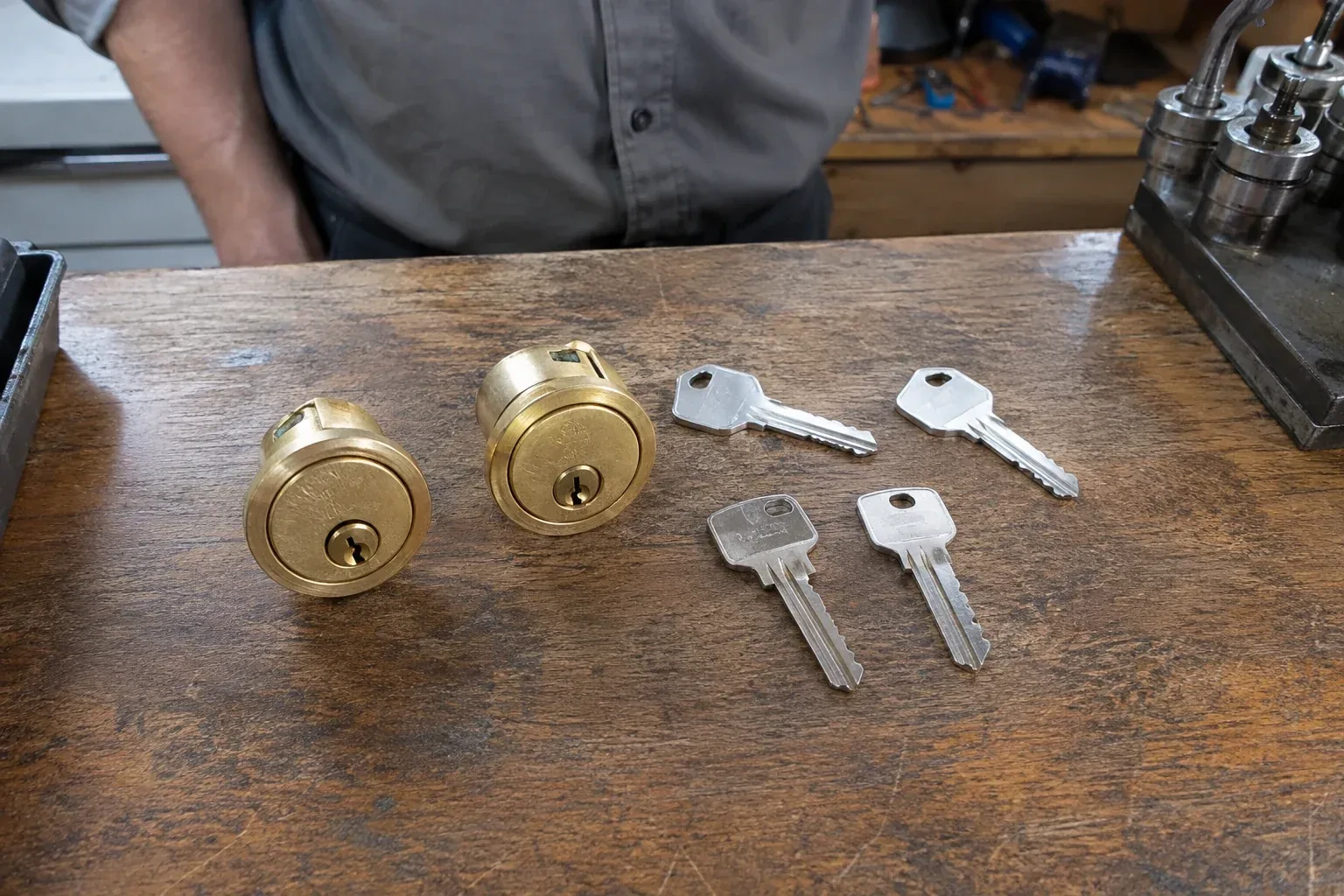
You are told plainly what was fitted: the maker and model, the grade, the function and finish of each lock, whether the strike was reinforced, and how the doors are keyed. The instruction sheets and packaging stay with you, since they carry the model numbers needed for a matching lever or a spare cylinder later. The old hardware is handed over or taken away as you prefer; a sound old cylinder can be worth keeping as a spare. For a rental, this account doubles as the note a landlord or property manager will want about the new keys.
In the van
- Handleset with matching deadbolt
- Cylinders, plug follower and pinning kit
- Knob or lever entry set
- Filler plates and thick-door extension kits
- Adjustable latch or bolt
What affects the quote
- 1
Strike reinforcement and jamb repair
A reinforced strike with long screws is a modest addition; repairing a jamb split from a forced entry, or fitting a strike box into a frame that has never had one, adds labour and materials.
- 2
Special-order hardware
Most standard locks come from the van. A specific style, an unusual finish or a restricted system may need ordering, which affects scheduling and is noted in the quote rather than discovered on the day.
- 3
Changes to the door preparation
Adjusting a strike mortise is minor; boring a new hole for a deadbolt, fitting a filler plate over an old mortise pocket or adapting a thick door with extension kits is quoted as its own item.
Same fees day, night or weekend.
Lock Replacement & Upgrade: questions
Which finishes stand up to salt and winter?
Finish is one of the three categories on the residential hardware label, and it covers exposure to sun, humidity, salt and skin oils. In practice, PVD brass, satin nickel and stainless finishes tolerate a salted driveway well, powder-coated black holds up when it is not chipped, and traditional lacquered brass tends to bloom green where salt reaches it. A storm door or a small overhang helps any finish, and wiping salt off in a thaw helps more.
What information helps before the visit?
Photographs of each lock from outside and inside, plus one of the door edge showing the latch plate and one of the strike on the frame, tell the locksmith most of what they need. Add the door thickness if you can measure it, whether the door is wood, steel or fibreglass, the finish you want to match, how many doors are involved and whether you want them all on one key.
What does a higher grade of lock actually give me?
Grades follow ANSI/BHMA standards, with Grade 1 the highest and Grade 3 the lightest, and residential hardware carries a separate label that scores security, durability and finish. The grade reports how the lock performed on the standard's own operational, strength and security tests; a higher grade often comes with a longer bolt, a sturdier housing, pins that resist picking and a strike built to anchor into the framing, but those features are worth confirming on the specific model rather than assumed from the grade alone.
Lock Replacement & Upgrade near you
Toronto, Ontario
Toronto information
- Town
- Toronto, Ontario
- In business
- 20 years
- Hours
- Open 24/7 · nights, weekends and holidays, same fees
- Phone
- (289) 301-2168
- Visits
- On-site assessment preferred. Request a visit or call.
What the census means at the door
58%
Older homes. About 58% of homes in Toronto were built in 1980 or earlier, according to the 2021 Census.
Older housing means older frames. Wood that has settled for years leaves strikes slightly out of line, so a bolt drags or needs a lift of the handle. A locksmith expects this and brings the shims, longer screws and strike plates to correct it.
23%
Single-detached houses make up about 23% of homes in Toronto (2021 Census).
Attached housing turns over more often than detached, so rekeying between tenants or owners is a constant. Because suite doors tend to be standard, the job is usually a straightforward pin change and a fresh set of keys cut on site.
Nearby
Open 24/7
Request a visit
Every morning the front door key needs the same little dance: push in, lift, wiggle, turn.
Call now · open 24/7(289) 301-2168- On-site assessment preferred
- Same fees day, night or weekend
- 20 years in business